By Jason Millieta
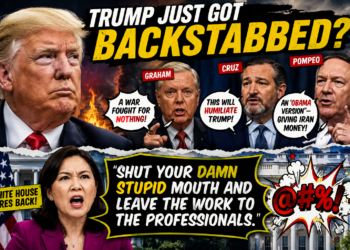
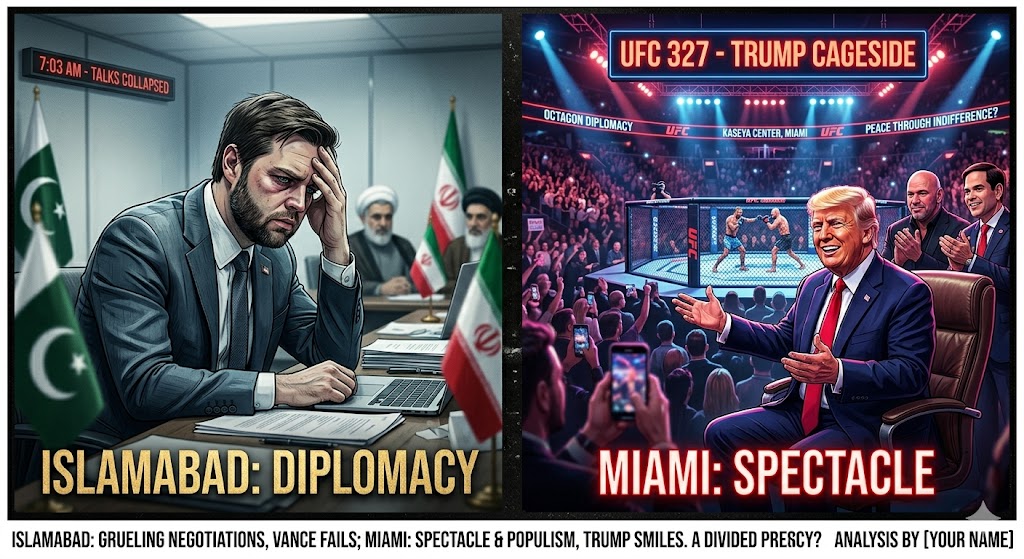
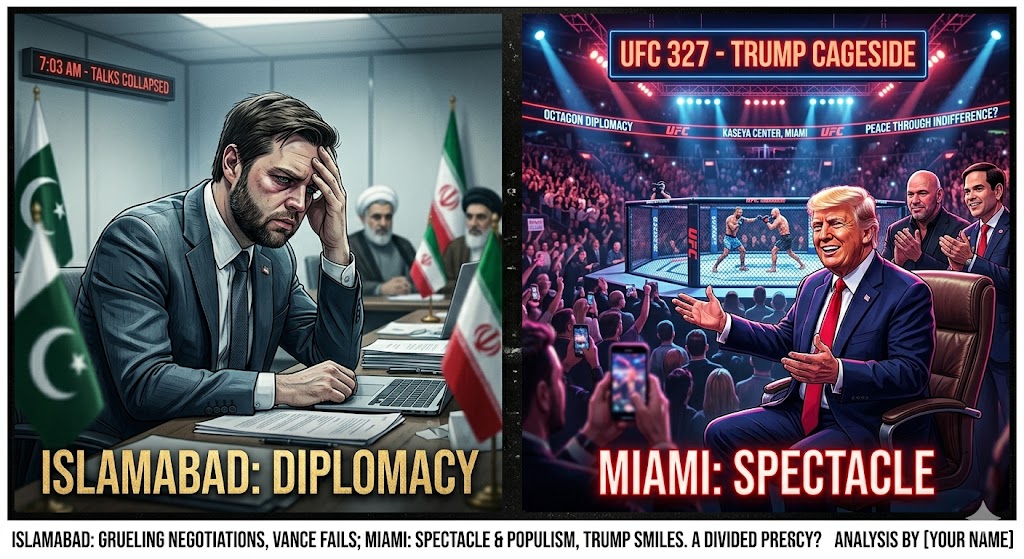
On the evening of April 11, 2026, two very different images of American power were broadcast to the world. In the sterile, high-tension atmosphere of Islamabad, Pakistan, Vice President JD Vance emerged from a marathon 21-hour negotiation session with Iranian officials. His exhausted face told the story before he reached the podium: the peace talks had collapsed.
Meanwhile, thousands of miles away in the neon-lit Kaseya Center in Miami, President Donald Trump was making a grand, choreographed entrance at UFC 327. As Kid Rock blared through the speakers and the crowd roared, the President took his seat cageside to watch world-class fighters trade blows in the octagon.
The contrast was more than a mere scheduling quirk; it was a profound illustration of the “Split-Screen Presidency”—a brand of leadership that deliberately separates the messy, often failing mechanics of traditional diplomacy from the high-octane, populist spectacle of the Commander-in-Chief.
The Grunt Work vs. The Show
For nearly a day, Vice President Vance was the face of the “Rules-Based Order.” Tasked with preventing a regional escalation that has already rattled global energy markets, Vance was mired in the minutiae of uranium enrichment levels, the Strait of Hormuz tolls, and the intractable demands of a defiant Tehran. By 7:00 AM local time, he was boarding Air Force Two, his mission a failure.
In contrast, President Trump was playing the role he has always preferred: the Ultimate Spectator. Flanked by UFC CEO Dana White and Secretary of State Marco Rubio, Trump engaged in what critics call “Octagon Diplomacy.” Rather than being seen grappling with the failure in Islamabad, the President was seen shaking hands with Joe Rogan and praising the sheer physical dominance of knockout winner Carlos Ulberg.
The Message in the Optics
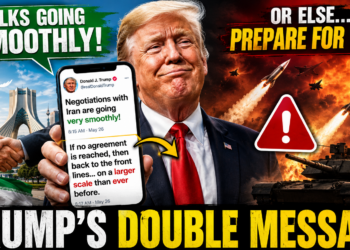
To the administration’s supporters, this is not a sign of negligence, but of confidence. The narrative from the White House is clear: while the “Junior Partner” handles the tedious, unrewarding work of international bureaucracy, the President remains the symbol of American strength and normalcy. By attending a UFC event while a peace deal crumbled, Trump signaled to his domestic base—and perhaps to Tehran—that he is not desperate for a deal. It was a projection of “Peace Through Strength” (or perhaps “Peace Through Indifference”).
However, to the international community and traditionalists in Washington, the optics are disastrous. At a time when the world expects the American President to be in the Situation Room during a major diplomatic crisis, he was instead seen cheering for a bloodsport. This “Boxing Diplomacy” suggests an administration that views foreign policy not as a delicate web of alliances, but as a series of zero-sum cage matches where the only thing that matters is the final knockout.
A Dangerous Precedent?
The danger of this duality lies in the message it sends to allies and adversaries alike. If the Vice President’s 21 hours of effort can be upstaged by a three-round fight in Miami, does American diplomacy still hold its gravity?
By distancing himself from the failure in Pakistan, Trump protects his personal “Winner” brand, leaving Vance to shoulder the weight of the impasse. But the world does not negotiate with personal brands; it negotiates with the United States of America. As the motorcade left the arena in Miami and Air Force Two began its long flight back from Islamabad, the reality remained unchanged: the octagon is a controlled environment with a referee and a bell. The international crisis with Iran has neither.
In the era of the Split-Screen Presidency, we must ask ourselves: are we watching a masterclass in psychological warfare, or a dangerous retreat into spectacle while the world burns?