Politics used to mean long speeches, serious expressions, and carefully crafted diplomatic statements.
Now?
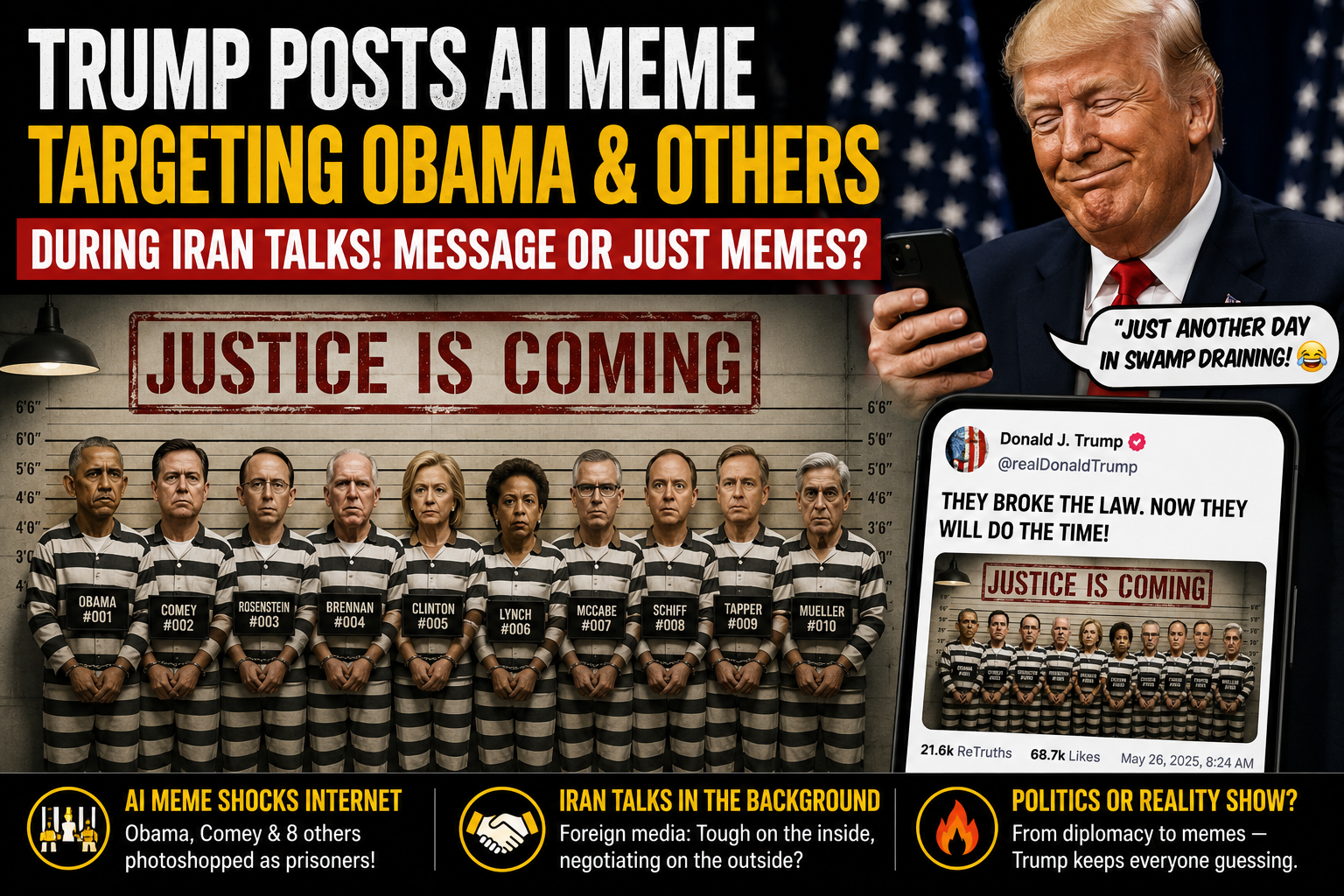
Sometimes it means opening your phone and seeing an AI-generated meme featuring politicians edited into what looks like a prison lineup.
On May 26, while headlines were still buzzing over negotiations involving Iran, Donald Trump appeared to be in an unusually relaxed mood. Instead of spending every minute buried in policy discussions and formal meetings, he found time for something that has become increasingly common in modern politics: posting internet-style content.
And not just ordinary content.
We’re talking about a highly dramatic, AI-generated image that immediately sent social media into detective mode.
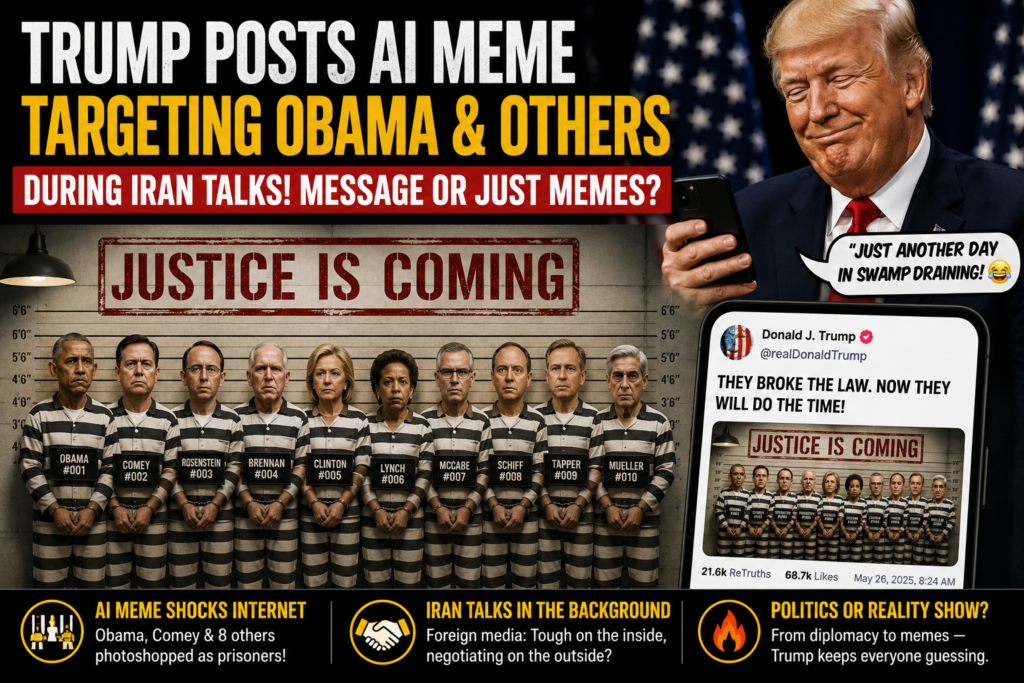
The image reportedly showed former President Barack Obama, former FBI Director James Comey, and eight others edited into a line of prisoners, creating a scene that looked less like a government document and more like the poster for an over-the-top streaming crime series.
Within minutes, people online had only one reaction:
“Wait… did politics just become meme culture?”
Trump Enters “Meme Commander Mode”
Trump has never exactly been known for quiet social media habits.
But observers joked that over the past few days he seemed especially energetic.
While many politicians release carefully worded statements with enough legal review to satisfy an army of lawyers, Trump often seems to operate on a different frequency entirely.
One moment: international negotiations.
Next moment: posting AI-generated content online.
The contrast itself became part of the story.
Political observers imagined White House staff meetings going something like this:
“Sir, we have updates regarding diplomatic negotiations.”
“Great. But first… look at this meme.”
Obviously, that’s internet humor rather than reality—but online audiences had a field day with the timing.
Because timing in politics is everything.
And this timing was impossible for people to ignore.
The Iran Factor Suddenly Appears
Although the image caption itself targeted political opponents, many foreign media observers immediately focused on a different angle.
The meme arrived during a period when discussions involving Iran were attracting attention.
That raised a question:
Was this simply Trump enjoying social media?
Or was there a larger political performance happening behind the scenes?
Some commentators suggested that the image created a strong “internal crackdown” atmosphere at exactly the moment Trump faced perceptions that negotiations with Iran might make him appear softer externally.
In simpler terms, the interpretation looked something like this:
External negotiations: diplomacy.
Internal messaging: strength.
Internet translation:
“Negotiate overseas, post memes at home.”
Politics has always involved symbolism, but social media may have turned symbolism into a 24-hour entertainment channel.
Social Media Turns Into A Gossip Festival
Online reactions exploded almost immediately.
Some users joked that the AI image looked like a crossover episode nobody asked for.
Others compared it to reality television:
“Coming this fall: Prison Politics — Season One.”
Still others focused less on the political implications and more on the fact that AI technology itself has entered the center of modern political theater.
Not long ago, political campaigns relied on television ads and carefully staged photo opportunities.
Now AI can generate dramatic scenes in seconds.
Today it’s memes.
Tomorrow? Nobody even wants to guess.
One user humorously wrote:
“We used to ask who controls the narrative. Now we ask who controls the image generator.”
Politics, Memes, and the New Attention Economy
Whether people loved the post or hated it, one thing became obvious:
Everyone talked about it.
And in today’s online world, attention behaves like currency.
A traditional policy statement might survive one news cycle.
A strange AI-generated political meme?
That can dominate conversations for days.
Trump has long understood how to pull attention toward himself, whether through speeches, television appearances, dramatic announcements, or social media activity.
This latest episode simply added another chapter.
Because in 2026, politics increasingly feels like a place where diplomacy, technology, internet culture, and reality-show energy all occupy the same stage.
And somewhere in the middle of negotiations, headlines, and international strategy, people found themselves staring at their screens asking:
“Did a geopolitical news story just become meme content?”
At this point, nobody seems completely surprised anymore.