Washington apparently woke up on May 18 and decided ordinary politics simply wasn’t exciting enough.
So what did viewers get instead?
A high-profile Oval Office maternity event complete with speeches, cameras, policy announcements, and enough awkward energy to power several cities.
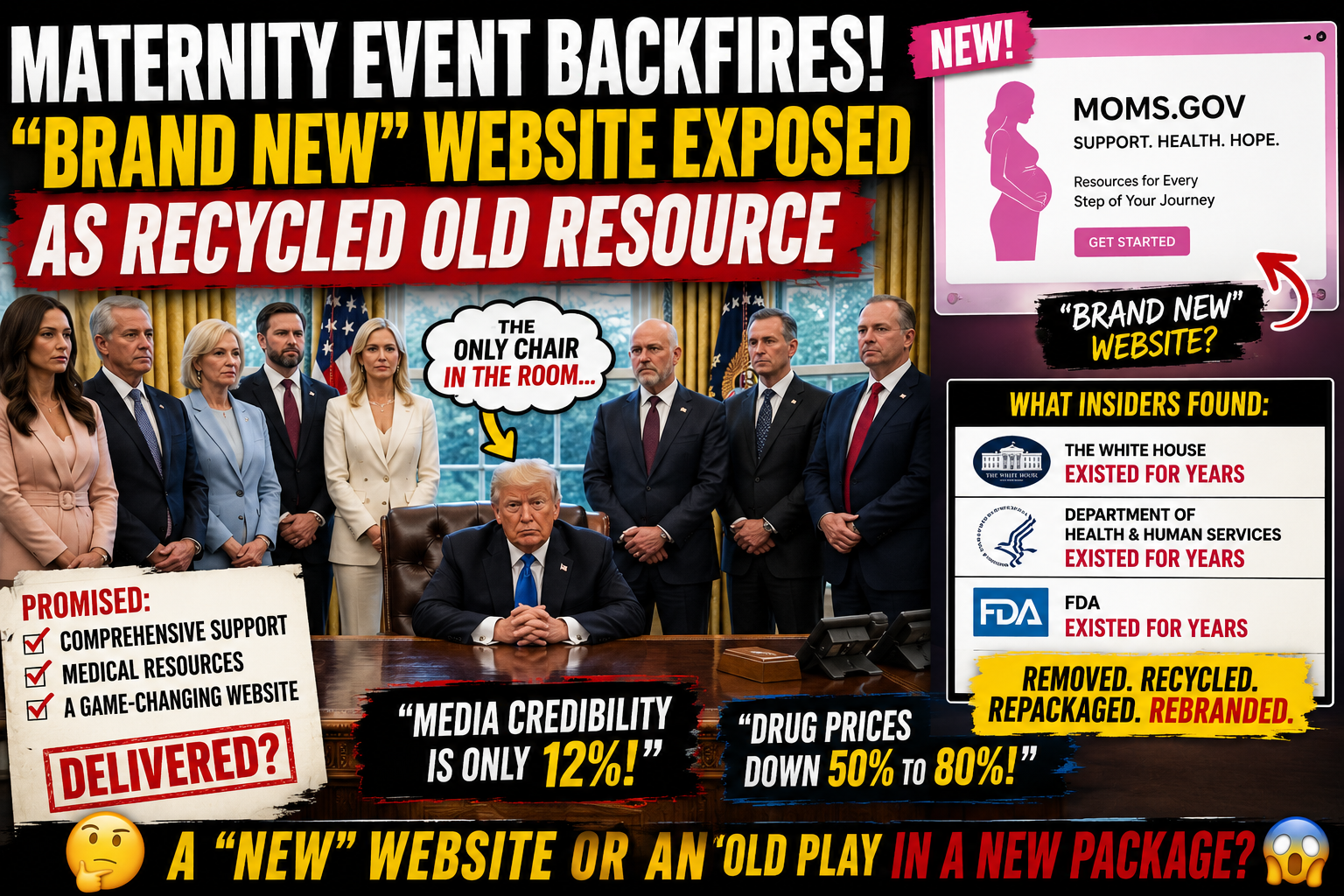
The headline attraction: President Trump unveiled what was promoted as a new support website for expecting mothers and families, presenting it as a major initiative intended to connect women with health information and pregnancy resources. Critics and commentators, however, quickly questioned how much of the material was actually new. Reports and opinion pieces argued that parts of the information resembled content that had long existed across government resources and public agencies.
And then the internet smelled drama.
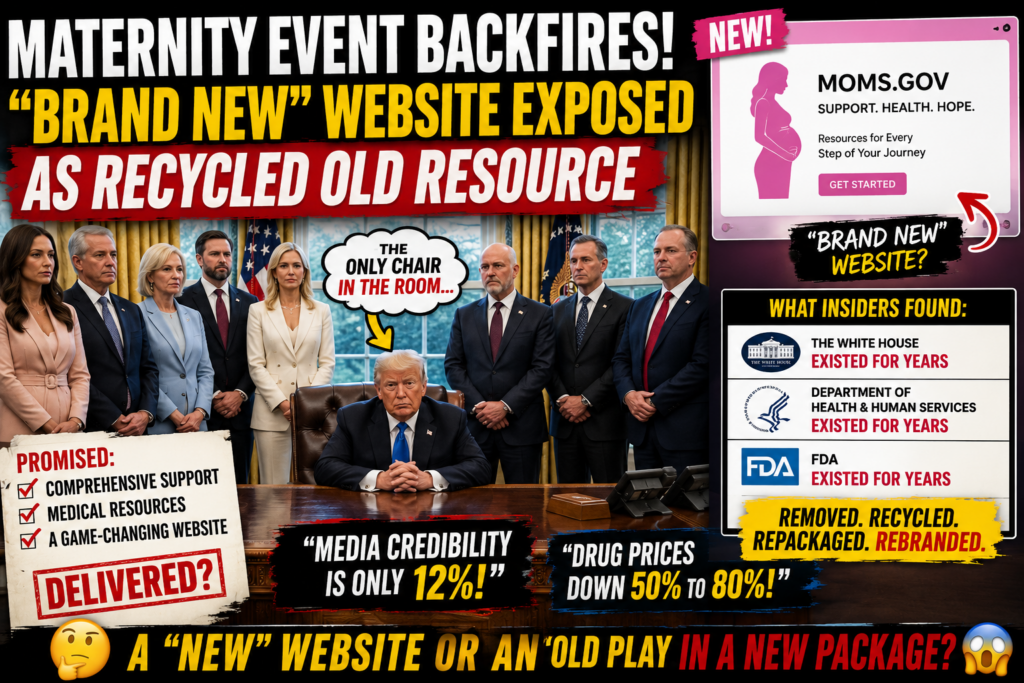
The Seating Arrangement That Made People Stare Harder Than The Announcement
Before anyone even reached the website discussion, social media had already become fascinated by something else.
The room arrangement.
Viewers immediately noticed a detail that launched thousands of comments:
Trump remained seated throughout much of the event while numerous participants stood around him.
Now, seating arrangements in Washington are usually not world-changing events.
But on the internet?
Nothing is too small.
Within minutes people were behaving like Olympic-level body-language experts.
“Wait… why is everyone standing?”
“Was this a meeting?”
“Was this a royal court?”
“Did someone accidentally recreate a medieval throne room?”
The comments practically wrote themselves.
Then The Website Story Took A Sharp Turn
The event promoted the website as a major resource hub for mothers and expecting families.
But critics quickly began arguing that much of the information looked familiar.
Very familiar.
Like-running-into-your-ex-at-the-supermarket familiar.
Commentators and advocacy groups argued that portions of the material resembled existing government information previously available through agencies and public resources. Critics also questioned whether the rollout represented a genuinely new program or a repackaging effort.
Social media immediately transformed into detective headquarters.
People acted as if they had just discovered a movie sequel marketed as a completely original film.
“Wait…”
“I’ve seen this before…”
“Is this Government: The Reboot?”
The online reaction quickly evolved into what can only be described as collective eyebrow lifting.
Then Trump Switched Topics Like Someone Clicking Browser Tabs Too Fast
As the event continued, the conversation reportedly moved far beyond maternity issues.
Media criticism entered the room.
Drug prices entered the room.
Political arguments entered the room.
At this point viewers probably started wondering whether someone had accidentally merged three different press conferences into one.
Trump argued that media trust had sharply declined and also pointed to claimed policy successes around healthcare costs.
Critics and analysts immediately pushed back, arguing that the broader healthcare picture remained much more complicated and disputing the scale of the claims being made. Discussions around tariffs, healthcare policy changes, and prescription costs have continued generating debate among policy observers.
The internet reaction?
Imagine twelve televisions all playing different channels simultaneously.
Washington Once Again Delivers Its Favorite Product: Confusion
By the end of the event, viewers had entered with expectations of hearing about maternity resources…
…and somehow left discussing website originality, body language, media trust, healthcare arguments, and political strategy.
At this point Washington increasingly resembles a streaming series where every episode begins with one plot and ends with four completely different ones.
Because apparently in modern politics, even a maternity event can somehow transform into a season finale. 👀🍿